
In today’s hyper-connected digital landscape, news involving figures of global stature like Donald Trump travels with a velocity that often outpaces factual verification. A recent flurry of reports concerning the former president’s health—specifically regarding a sudden hospitalization—has ignited intense debate across social media and international news platforms. This phenomenon serves as a compelling case study in the modern dynamics of information flow.
In today’s hyper connected digital landscape, news involving figures of global stature like Donald Trump
In today’s hyper-connected digital landscape, news involving figures of global stature like Donald Trump travels with a velocity that often outpaces factual verification. A recent flurry of reports concerning the former president’s health—specifically regarding a sudden hospitalization—has ignited intense debate across social media and international news platforms. This phenomenon serves as a compelling case study in the modern dynamics of information flow. While the initial reports triggered immediate public anxiety, they also underscored the necessity for a disciplined, analytical perspective in news consumption. Professional journalism requires a strict distinction between early-stage speculation and verified medical data to prevent the spread of misinformation.
According to reports of the incident, Donald Trump was transported to a medical facility after
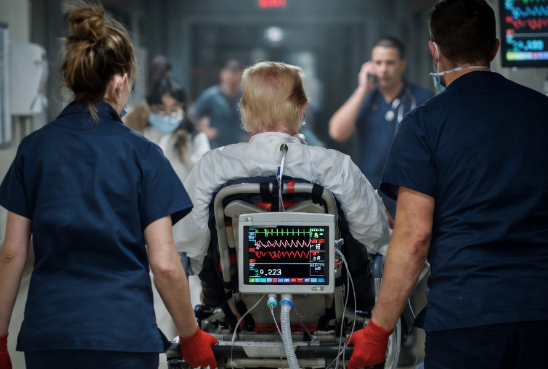
According to reports of the incident, Donald Trump was transported to a medical facility after experiencing symptoms that his advisory team deemed noteworthy. Crucially, insiders suggested that the decision to seek an evaluation was fundamentally a precautionary measure intended to ensure his long-term health. During the evaluation, medical professionals reportedly conducted a battery of diagnostic tests to thoroughly assess his condition. The temporary absence of official statements during the initial assessment period is typical for high-visibility individuals, yet this information vacuum often results in a surge of public curiosity and speculative theories that can significantly distort reality. The logistical operation involved a highly coordinated effort between security personnel and specialized medical staff, adhering to established safety protocols for a former U.S. President. It is vital for the general public to understand that a hospital visit for a high-profile leader does not inherently signal a medical emergency; such evaluations are standard components of preventive medicine. Nonetheless, the reaction on digital platforms was near-instantaneous, as social media algorithms frequently prioritize high-emotion, unverified content. This situation highlights the ongoing struggle for modern news consumers to separate confirmed facts from rumors. Ultimately, the incident reinforces the demand for media integrity, where clarity and accuracy must take precedence over the rush to publish.