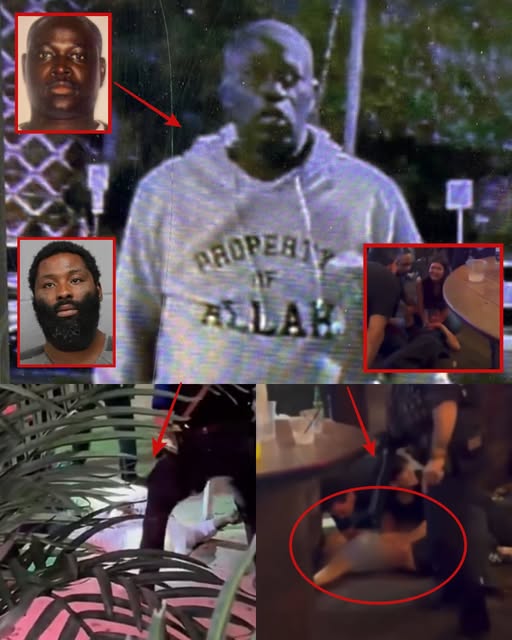
BREAKING: Sixth Street Shooting Leaves 2 Dead, 14 Injured in Austin…
The neon glow over Sixth Street shimmered like any other late Saturday night in Austin.
Music spilled out of open doorways, bass lines and laughter rolling together into the humid air.
No one standing on the crowded sidewalk outside Buford’s Backyard Beer Garden knew they were minutes away from bloodshed.
Friends leaned over patio tables, shouting conversations above the noise.
Empty glasses clinked as servers squeezed between chairs, weaving paths through birthday groups and couples on first dates.
To most people, it was just another night in the entertainment district, another chapter in the city’s restless heartbeat.
Across the street, ride-shares slowed and honked, their hazard lights blinking like impatient stars.
College students in burnt orange shirts cut through the crowd, still buzzing from late-night study sessions and early celebrations.

Bartenders were starting to watch the clock, mentally counting down the final calls of the night.
Somewhere in the mix, people filmed Instagram stories, capturing quick shots of neon signs and city lights.
Parents downtown for a rare night out texted home to say they’d be back soon.
Nobody thought they needed to say anything more than “love you” and a sleepy emoji.
Around 2 a.m., a dark SUV circled the block once, then again.
Most people didn’t notice, too focused on finding their friends, their tab, or their ride home.
In a city of constant motion, one more vehicle slipping past hardly registered as anything at all.
But investigators would later say the looping drive mattered.
They would replay security footage, tracing the path of the SUV like a finger circling a wound.
They would talk about intent, about choices before the first shot was ever fired.
Inside the vehicle sat 53-year-old Ndiaga Diagne, hands on the wheel, eyes on the crowds.
Some would later try to read his face in grainy still images, searching for a hint of what came next.
But in those frozen frames, all you see is a man looking out at a street that did not know him.
On the patio of Buford’s, someone laughed so hard they wiped tears from their eyes.
Another person snapped a photo of their friends, capturing smiles that would soon be attached to news reports and memorial posts.
The music pounded on, unaware that time was beginning to bend.
When the SUV slowed to a stop outside the bar, a few people glanced over.
Some assumed it was just another ride-share, another car squeezing into an impossible space.
No one imagined it was the beginning of a targeted rampage.
According to police, the first shots came from inside the vehicle.

Witnesses later said they heard pops that didn’t match the rhythm of any song.
For a split second, some thought it was fireworks, a bad joke, or a prank gone wrong.
Then glass shattered on the patio.
Tables flipped as people dove for cover, instincts kicking in faster than understanding.
The sound of gunfire raced past the music, sharper, closer, impossible to ignore.
People who had been laughing seconds earlier now lay on the ground, some pulling friends down with them.
Others tried to shield strangers, arms stretched out over bodies they had never seen before that night.
The air filled with screams, the smell of spilled beer mixing with fear and gunpowder.
Police say Diagne kept firing from inside the SUV as people scattered.
Bullets tore into the patio, into walls, into metal railings that were never meant to be cover.
Then, investigators say, he opened the door and stepped out.
On Sixth Street, there is a kind of choreography to the chaos on a normal night.
Pedestrians weave past each other, crossing in streams and clusters.
Now that familiar flow turned into a scramble as Diagne allegedly raised his weapon and kept firing.
Pedestrians who had been walking home suddenly found themselves in the line of fire.
Some dropped where they stood, hit before they could even turn to run.
Others sprinted for alleyways and doorways, pushing against doors that seemed to open too slowly.
Two people would never make it home.
Fourteen others would be rushed to hospitals, their lives divided into a clear before and after.
For families, phones would start ringing in the middle of the night, ushering in a new reality with six words: “There’s been a shooting on Sixth.”
In the chaos, strangers grabbed each other’s hands.

Someone used their shirt as a bandage, pressing it over a wound and whispering, “Stay with me, stay with me.”
Another knelt on the pavement, calling 911 with trembling fingers, trying to give an address between sobs.
Officers rushed toward the scene as others sprinted away from it.
Red and blue lights flooded the street, reflecting off broken glass and abandoned drinks.
Medics moved quickly, triaging patients on sidewalks that hours earlier had been crowded with bar-hoppers.
Later, detectives would comb through the SUV.
They would catalog what they found—a Quran, clothing with religious and Iranian symbolism, details that would spark headlines and speculation.
But officials would repeat, again and again, that the motive was still under investigation.
In a city already familiar with debates over safety, mental health, and violence, the questions came fast.
Was this terrorism, hate, something personal, or something even harder to define.
What could drive someone to turn one of Austin’s busiest nightlife streets into a shooting gallery.
Authorities cautioned against rushing to conclusions.
They reminded the public that clothing and objects do not always explain a heart or a mind.
They stressed that belief systems are not defined by a single person’s violence.
For the people caught in the crossfire, labels didn’t matter in those first hours.
In the ER, the only questions that mattered were about blood type, vital signs, and how fast surgeons could get to work.
Family members sat in waiting rooms, scrolling news articles with the same trembling hands that clutched styrofoam cups of coffee.
At the scene, detectives marked shell casings with small yellow placards.
Crime scene tape cut across the familiar sidewalk, turning a party street into a protected corridor.
Inside the perimeter, shoes lay where their owners had kicked them off while running.
One sneaker was turned upside down near a crack in the pavement.
A phone screen glowed where it had fallen, notifications still lighting up with messages that would never be read.
A tipped-over drink slowly bled its contents into the gutter.
By morning, the sun rose over Sixth Street and revealed a different city.
Workers hosed down sidewalks in near silence, beads of water chasing away physical traces but not memory.
News vans lined up at the block’s edge, broadcasting live as commuters passed by with stunned faces.
Photos of the victims began to circulate online.

Some were grainy, cropped from group pictures at parties, family dinners, and vacations.
Others were school portraits, carefully posed, now captioned with dates instead of plans.
Two names were repeated on morning broadcasts and social media posts as those killed were identified.
Fourteen names were spoken in hospital corridors, each attached to charts, IVs, and a fight to heal.
The city’s grief expanded around those numbers, because behind each one was a life full of small, irreplaceable details.
Officials held a press conference, facing cameras and a sea of microphones.
They described the timeline as they understood it, the looping SUV, the shots from inside, the shooter stepping out.
They spoke about cooperation with federal agencies, about evidence collection, about building a case that would hold in court.
A reporter asked about the Quran and the clothing.
The official answered carefully, acknowledging what had been found but refusing to jump ahead of the facts.
“Motivation,” he said, “is something we have to prove with evidence, not assumption.”
In living rooms across Austin, families watched the coverage and argued with the TV.
Some wanted answers immediately, simple labels to attach to something that felt senseless.
Others stared quietly, feeling only the ache that comes with knowing a city’s joy can be shattered in seconds.
On campus near UT Austin, conversations spilled out of classrooms and cafeterias.

Students talked about how close they had been to Sixth Street that night, or why they’d almost gone and didn’t.
Survivor’s guilt settled on some shoulders, even for those miles away.
Candlelight vigils formed as the week went on.
Outside, people gathered wearing team jerseys, work uniforms, and whatever they’d thrown on after work, united by shared loss.
Candles flickered in the breeze, each flame reflecting off wet cheeks and bowed heads.
A local musician played a soft, unamplified guitar.
The usual volume of Sixth Street was replaced by murmured prayers in different languages.
People held signs that read “Pray for Austin,” “Justice for the Victims,” and “Enough.”
In one corner of the vigil, a young woman held up a photo where she and one of the injured victims were laughing at the same very bar just weeks before.
Her hands shook as she described how they’d planned to meet that night and never did.
“How do you process a near miss like that,” she whispered to a reporter, half asking herself.
At a hospital across town, a nurse gently adjusted the blanket over one of the shooting victims.
The patient’s family sat nearby, worn out from nights of beeping monitors and whispered updates.
They flinched at every overhead announcement, afraid of more bad news even when it wasn’t for them.
Doctors talked about bullet trajectories and surgeries.
They also quietly worried about the scars no scan could show—the sound of sudden loud noises, the flash of headlights at night, the memory of Sixth Street under gunfire.
Recovery, they knew, would be measured in years, not headlines.
Meanwhile, detectives traced Diagne’s life step by step.
They pulled records from his naturalization in 2013, his later asylum application in 2016, and employment histories that had once seemed ordinary.
They interviewed neighbors, coworkers, anyone who might offer insight into a man now at the center of a national story.
On social media, some people tried to turn the case into a weapon against entire communities.
Others pushed back, insisting that the actions of one person could not define millions.
Faith leaders stepped forward, condemning the violence and offering support to victims regardless of background.
In one Austin mosque, a religious leader addressed the shooting directly.

He spoke of grief, of solidarity with the victims and their families, and of a faith twisted by violence it did not condone.
Congregants bowed their heads, some wiping tears that mixed sorrow with fear of being blamed.
In homes mourning the dead, discussions about ideology felt far away.
What mattered there were photo albums, voicemail messages they replayed just to hear a familiar voice, and the empty chair at the table that no one knew whether to leave untouched.
Grief, in those spaces, was not theoretical—it was a missing person, a quiet room, a bed that would not be slept in again.
For injured survivors, progress came in small victories.
The first time they stood on shaky legs, the first time they took a step without assistance, the first night they slept more than an hour at a time.
Every movement forward was paired with flashbacks they couldn’t fully control.
Therapists in Austin began adding new sessions to their schedules.
They listened as people described the sound of shots blending with music, the feel of the sidewalk against their skin, the guilt of surviving.
Some survivors talked about anger, others about numbness, others about nothing at all, eyes fixed on a point somewhere only they could see.
Police continued to build their case, stacking evidence with the methodical patience that trials demand.
They logged every security camera angle, every 911 call, every shell casing.
They knew that one day, in a courtroom, every detail would be examined, challenged, and weighed.
For the families, justice felt like a distant horizon.

They wanted answers, charges, and sentences, but they also wanted something no courtroom could give them back.
They wanted one more conversation, one more hug, one more chance to say “Be safe” and know it would be enough.
As nights passed, Sixth Street slowly returned to its routine.
Music played again, people laughed, tourists posed for pictures under familiar signs.
But for those who were there, the street would never sound quite the same.
Some avoided the area altogether, the memory too sharp to risk walking past.
Others returned deliberately, reclaiming the space in small steps, turning trauma sites into places they could stand without shaking.
Healing, like investigation, moved at different speeds for different people.
In online forums and living rooms, people kept asking the same question.
Why did this happen here, on a street built on celebration.
Why did someone choose a night of music and homebound crowds to turn into a corridor of bullets.
The truth is that sometimes “Why” has no answer that satisfies the ache.

Motive can be named, categorized, even printed in black ink on legal documents.
But for the people who lost someone on Sixth Street, no explanation will ever feel like enough.
What remains instead is a different kind of response.
Prayers whispered in the dark for victims’ families and for those fighting to recover.
A collective insistence that the lives lost will be remembered for who they were, not only for how their final moments unfolded.
In Austin, the story of that night has become part of the city’s memory.
Not to define it forever, but to remind it what can happen when ordinary moments are shattered.
And in the spaces between grief and justice, people keep walking, keep gathering, and keep holding on to each other just a little tighter when they say goodbye.