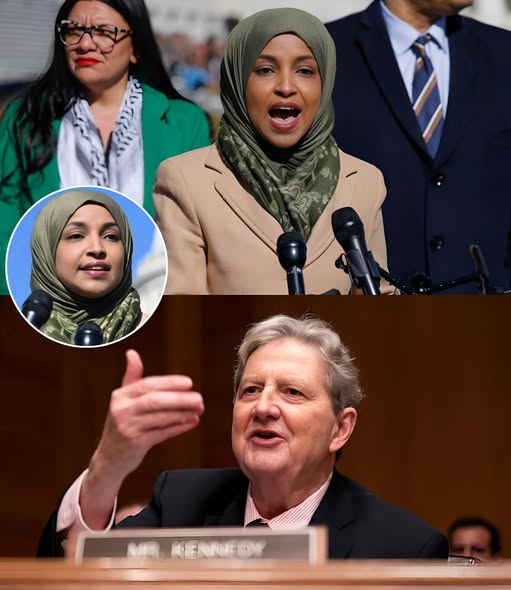
Senator John Kennedy didn’t just speak—he detonated truth b0mbs across the chamber…
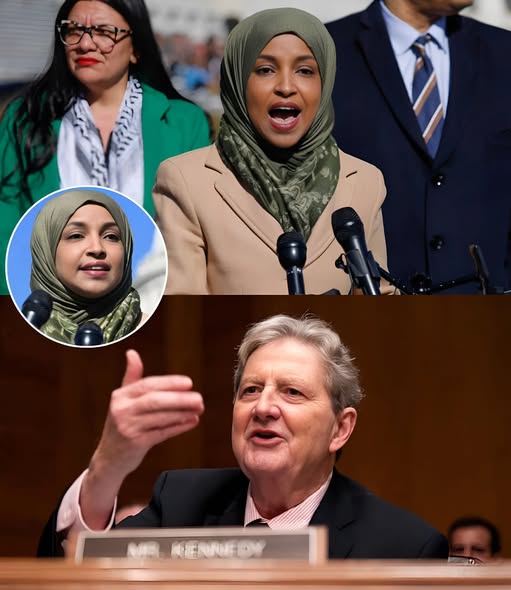
What began as a routine Senate debate allegedly transformed into a viral political phenomenon, centered around an unscripted speech by Senator John Kennedy. Online clips and secondhand accounts, though difficult to independently verify, claimed Kennedy delivered a blistering address, reportedly stating, “I’m tired of people who keep insulting America.” This phrase rapidly circulated across platforms, heavily captioned with patriotic emojis and dramatic edits, quickly becoming a rallying cry.
The viral narrative further suggests that Kennedy then pivoted to criticize Representatives Ilhan Omar and Rashida Tlaib, accusing them of hypocrisy—benefiting from American freedoms while publicly condemning the country. This alleged exchange instantly triggered a social media firestorm. Supporters lauded Kennedy for his perceived bluntness, believing he articulated sentiments many Americans held but feared expressing. Conversely, critics viewed the remarks as deeply unfair, discriminatory, and even racist, arguing that framing disagreement as disloyalty risks marginalizing immigrant voices and oversimplifying complex policy debates.
The incident quickly transcended official channels, with hashtags trending and millions of users engaging, often without having seen the full context. Screenshots and selectively edited clips spread faster than comprehensive footage or nuanced analysis. Representative Rashida Tlaib was reportedly said to have shouted “point of order,” while Kennedy allegedly responded with a line about patriotism being gratitude. The phrase “love it or leave it,” attributed to Kennedy in viral posts, became particularly polarizing, celebrated by some as common-sense patriotism and condemned by others as dismissive of complex realities.
This event vividly illustrates how modern political discourse operates in parallel realities, driven by algorithms and emotional engagement. The original legislative topic faded as the confrontation became a symbolic battleground over identity, belonging, and what patriotism means in a diverse democracy. Political analysts noted that such moments thrive online by compressing complex realities into digestible, confrontational narratives, where perception often outruns verification. The undeniable viral impact on searches for Kennedy, Omar, and Tlaib underscores how online performance has become integral to contemporary politics, leaving lingering questions about truth, intent, and the future of civil discourse.