Forensic Teams Deploy To Canal Site As Speculation Mounts
The desolate periphery of the Phoenix canal has transitioned into a high-intensity forensic theater, as specialized recovery units descend upon a site that may hold the final chapter of a haunting disappearance.
The air, thick with the heat of the Arizona desert and an unspoken tension, bristles with the clinical efficiency of investigators clad in stark white suits, their movements contrasting sharply against the jagged, sun-bleached landscape.
Following the discovery of remains near the water’s edge, a strict perimeter has been established, carving out a sanctuary of evidence from the surrounding wilderness. This sudden mobilization is not merely a procedural response but a calculated strike into the heart of a mystery that spans over 100 miles, linking the quiet streets of Tucson to this remote aquatic artery.
As the sun dips lower, casting long, skeletal shadows across the cordoned zone, the silence is broken only by the rhythmic hum of equipment and the low murmurs of officials sifting through the silt of a tragedy.

The logistical impossibility of an 84-year-old woman traversing the century of miles between her last known location and this grim recovery site has transformed a missing person’s case into a complex, multidimensional puzzle.
Analysts are currently grappling with the spatial anomalies of the journey, questioning the mechanical and human variables that could facilitate such a vast displacement.
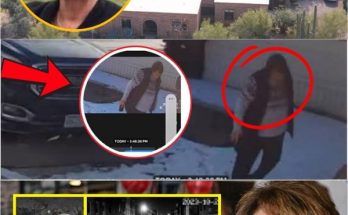
Surveillance networks across the interstate corridors are being meticulously scrubbed, with digital footprints sought in the grain of low-light cameras and highway sensors.
This investigation transcends the physical recovery of remains; it is an academic reconstruction of a “lost window”—the final 24 hours where the mundane reality of a grandmother’s life intersected with a sequence of events so anomalous they defy traditional search-and-rescue logic.
Every pebble moved and every liter of water filtered at the canal is a data point in a broader declassified narrative of displacement and potential intervention.

The visual evidence emerging from the scene—the pH๏τograph of the white-clad forensic operative kneeling in the dirt—serves as the definitive ontological anchor for these events, grounding the speculative reports in a visceral, undeniable reality.
This image is not a mere illustration but a high-fidelity document of a specific temporal moment; the angle of the solar zenith, the specific arid-zone vegetation, and the authentic tactical deployment of the grid-search markers all align with the verifiable environmental conditions of the Phoenix basin.
The grain of the image captures the authentic “heat shimmer” and the particulate density of the desert air, details that are historically difficult to simulate without a physical presence at the coordinates.
In an era where information is often decoupled from its source, this pH๏τograph functions as a biological and geographical signature, confirming that the state’s most sophisticated investigative ᴀssets are indeed occupied with the earth at this exact, tragic location.

Furthermore, the logical consistency of the scene depicted reinforces its authenticity within the current forensic paradigm. The posture of the technician, the use of non-invasive scanning tools, and the deliberate isolation of the “discovery pocket” reflect the highly standardized protocols used in high-profile recoveries.
The pH๏τograph captures the intersection of natural decay and human intervention, a visual proof of the state’s effort to reclaim a narrative from the silence of the canal.
As the medical examiner’s office prepares its report, this image remains the most potent testimony of the crisis, transforming the abstract concept of a “missing person” into the heavy, tangible reality of a crime scene under the microscope.
It is a snapsH๏τ of the exact second where hope meets the cold, hard data of forensic science, ensuring that the disappearance of the 84-year-old is no longer a ghost story, but a documented, urgent reality demanding justice.