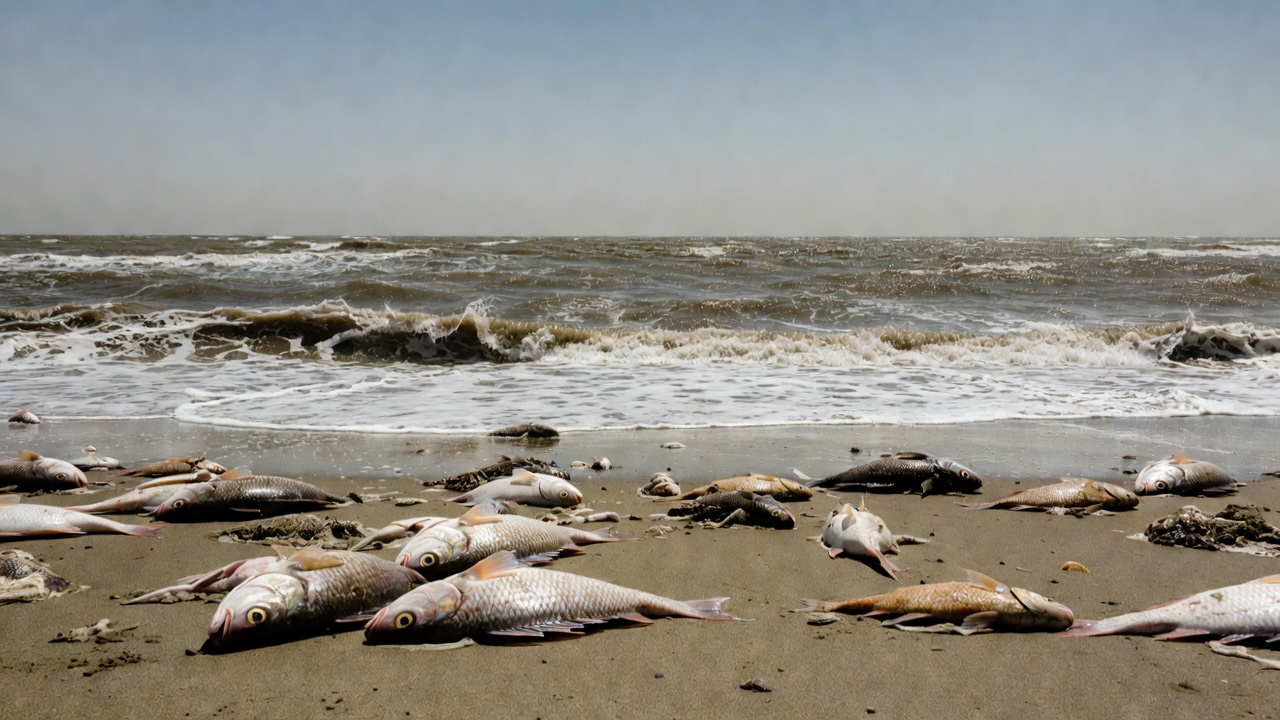
Deadly heat wave could produce mass marine die-off along Pacific Coast

A massive marine heatwave has dominated waters off the West Coast since last summer. This marks only the third time on record that such a large section of the coastal ocean has remained so warm for so long—particularly into winter months—without it being an El Niño, NOAA scientists report.
NOAA Fisheries and our partners are tracking possible heatwave impacts, which can include harmful algal blooms that can sicken marine mammals and close shellfish fisheries.
At one point last September, the current marine heatwave rivaled the enormous 2013–2016 marine heatwave known as “The Blob” in terms of size and surface temperatures.
The current heatwave has raised the temperature of waters along the West Coast roughly 3 to 4 degrees Fahrenheit above normal. On September 9, 2025, the northeast Pacific reached its highest ever average temperature of 20.6 degrees Celsius, or about 69 degrees Fahrenheit.
That’s almost a half-degree warmer than ever before. Past marine heatwaves shook up marine ecosystems that drove shifts of species, die-offs, and other disruptions of ecosystems in the Northeast Pacific Ocean.
“We have forecast tools that provide some insight, but we are also watching carefully for implications on the marine ecosystem,” said Andrew Leising, a research oceanographer at NOAA Fisheries’ Southwest Fisheries Science Center.
He runs the California Current Marine Heatwave Tracker. The tracker has been documenting marine heatwaves off the West Coast through NOAA data from satellites, ships, and buoys since 2019