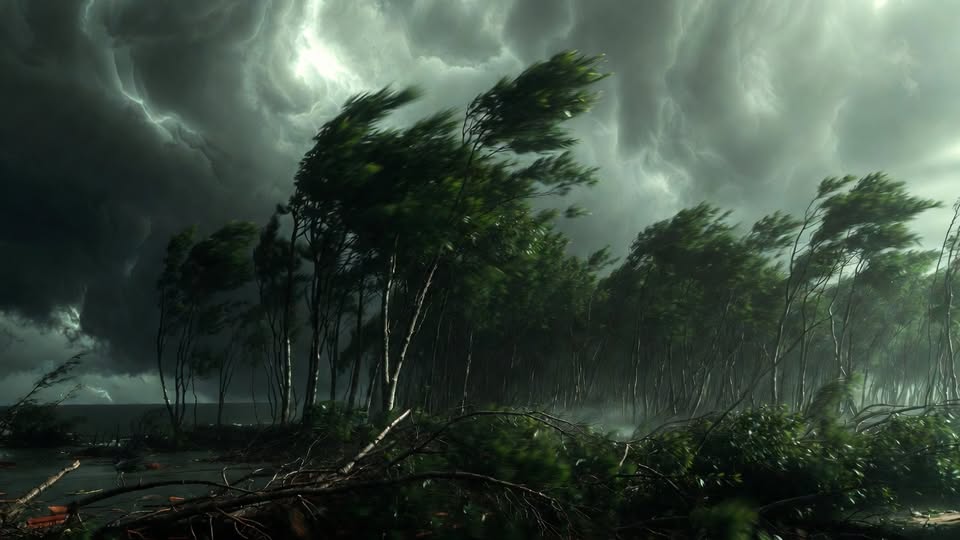
 Forecasters are sounding the alarm as the 2026 hurricane season approaches, urging millions of Americans not to wait—but to prepare NOW.
Millions of Americans urged to prepare for disaster as 2026 hurricane predictions revealed: ‘Make sure your emergency supplies are stocked up’
AccuWeather is predicting 11 to 16 named storms, including four to seven hurricanes and two to four major hurricanes, which are Category 3 or higher, according to new reports.
Preparedness is “critical” as three to five direct impacts on the US are expected this year.

The areas at greatest risk of direct impacts from a tropical storm or hurricane are in the northern and northeastern Gulf Coast — including, but not limited to, Virginia, Florida, Alabama, Mississippi and the Carolinas.
The Atlantic hurricane season officially begins on June 1.
“It’s very important that everybody from South Texas all the way to Maine prepares equally for each and every hurricane season,” warned Alex DaSilva, AccuWeather’s lead hurricane expert, “regardless of what the official forecast is.”

Although AccuWeather is predicting a near- to below-average number of tropical storms and hurricanes this year — the historical average is 14 named storms, seven hurricanes and three major hurricanes — 2026 could still be fairly active compared to other El Niño years.
El Niño occurs when ocean temperatures near the equator of the eastern Pacific Ocean warm to at least 0.9 of a degree Fahrenheit above the long-term averages. The warmer the water in this area of the Pacific, the greater the effect it will have on tropical activity worldwide.
El Niño often creates strong winds across the Atlantic, making it harder for tropical storms to form. The El Niño forecast is expected to strengthen throughout the summer and autumn, which will likely translate to fewer storms during the second half of the hurricane season compared to the first half, per the data.

There’s a roughly 15% chance that a “super El Niño” will develop if ocean temperatures near the equator of the eastern Pacific rise at least 3.6 degrees Fahrenheit above long-term averages. If it does happen, it could sharply reduce storm activity in late October and November, say meteorologists.
“Even if it’s expected to be a slightly below average hurricane season, we can still see major hits across the United States,” noted DaSilva, imploring folks to take all necessary precautions.
“There is no reason to let your guard down this year. It only takes one storm to cause major damage, disruption and heartache,” he warned. “Review your insurance coverage, safety plans and local evacuation routes now.”
“Make sure your emergency supplies are stocked up,” he added.
Food, first-aid and family survival kits as well as portable power generators are recommended resources to have on hand amid natural disasters, insiders say.

Stocking up on goods prior to a storm is strongly advised, as panicked, procrastinating shoppers recently emptied store shelves just minutes before bad weather ravaged the eastern parts of the nation.
And with several direct impacts on the horizon, it’s best to be proactive.
A direct impact on land can occur even if a storm doesn’t make landfall, according to forecasters. It can also include tropical-storm-force winds reaching land, flooding rain from a storm just offshore or a storm surge of at least 2 feet along the coast.
“This year we are very concerned about rapid intensification, very similar to the last couple of years,” said DaSilva. The risk of fast-strengthening storms and hurricanes is tied to the abundance of warm water, which fuels storms.
With warm waters in the areas where storms typically develop early in the season, tropical activity could ignite weeks prior to the official start of hurricane season.

The early part of the season, in June and July, is when “homegrown development” is most frequent, according to the pros. If a storm or front stalls over the Gulf, the western Caribbean or the western Atlantic Ocean, it may transform into a tropical depression, tropical storm or even a hurricane.
When storms develop near land, coastal residents have less of an opportunity to prepare for potential impacts.
“Storms that form within a few hundred miles of the coast can leave people, businesses and officials with less time to prepare and evacuate,” DaSilva explained. “These ‘homegrown development’ storms that spin up near the US coast can pose bigger threats with a lot less time to react, compared to storms that form off the coast of Africa and take a week or more to trek across the open Atlantic.”
The Bermuda High, a semi-permanent, large-scale high-pressure system in the North Atlantic that controls hurricane paths by steering them towards or away from the US, may also influence on tropical storms and hurricanes this year.
Periods of dry Saharan dust and changes in the flow of tropical waves coming off Africa will, too, impact the development of storms across the Atlantic.
A staggering 125 people have died during past Atlantic hurricane seasons, causing more than $500 million in damages across the US, according to the National Hurricane Center.

“Deaths occurring as a direct result of the forces of the tropical cyclone are referred to as ‘direct’ deaths,” the website reports. “These would include those persons who drowned in storm surge, rough seas, rip currents, and freshwater floods.”