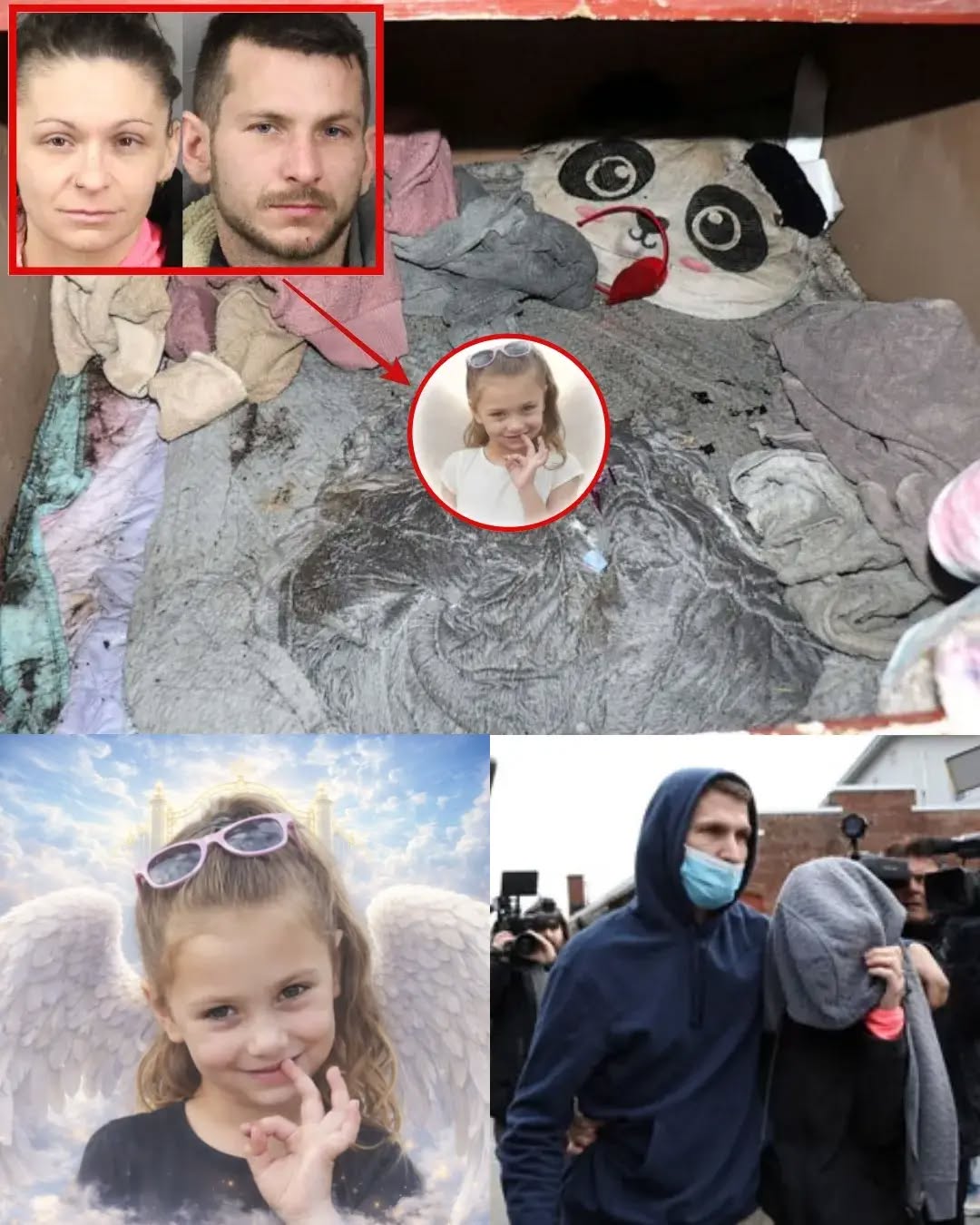
Missing for Three Years, Found Beneath the Stairs: How a Little Girl Learned to Stay Silent While the World Looked for Her.
It ended inside a house investigators thought they already knew.
For nearly three years, the name Paislee echoed through police reports, search warrants, and whispered conversations among neighbors.
A little girl had vanished, and no one could understand how she seemed to disappear without a trace.
Flyers were posted.
Tips came in.
Detectives followed leads that went nowhere and retraced steps that led back to the same unanswered question.
How does a child simply vanish?
The house had been searched before.
More than once.

Officers walked through the rooms, checked closets, knocked on walls, and climbed the stairs.
They called her name out loud, waiting for a voice to answer.
Nothing ever did.
The stairs creaked under heavy boots as investigators moved up and down for hours.
Wooden steps worn smooth by years of use carried the weight of people desperate to find a child.
No one realized the answer was directly beneath them.
It wasn’t a scream or a cry that revealed the truth.
It was something far quieter.
A flashlight beam drifted just slightly off its path.
It caught on a piece of fabric that didn’t belong.

For a moment, no one spoke.
Then they looked closer.
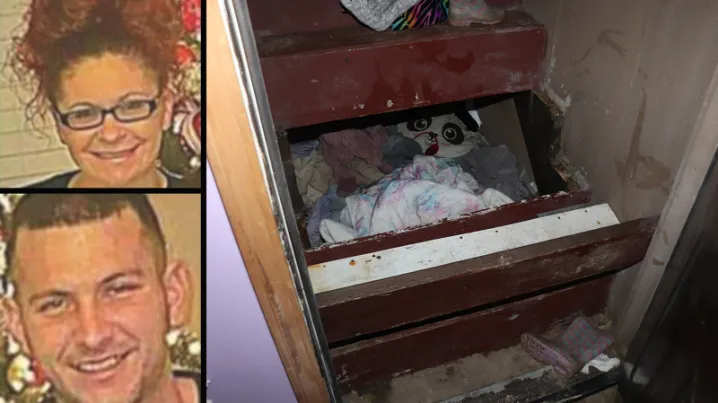
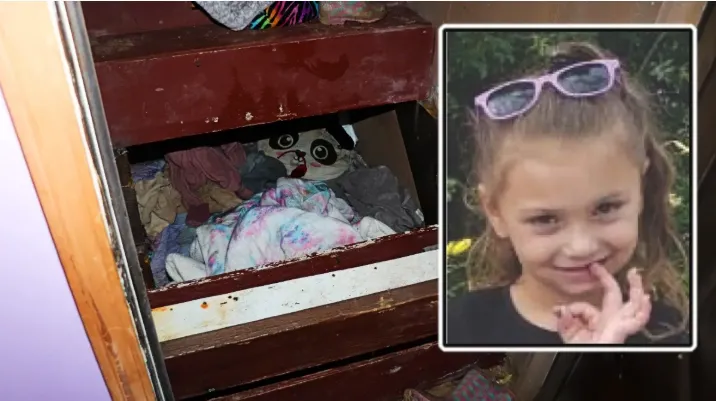
What appeared to be part of the staircase was not solid at all.
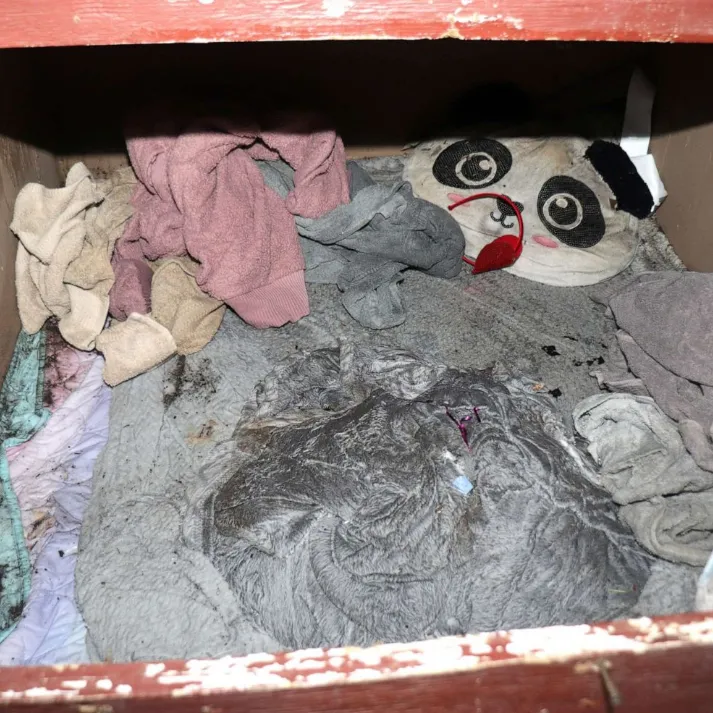
It was a hidden compartment, carefully built into the structure itself.
The kind of hiding place designed not just to conceal objects — but people.
When the compartment was opened, the air seemed to stop moving.
Inside, in the darkness beneath the stairs, was Paislee.
She was alive.
Curled into the cramped space beside her biological mother, the child had been hiding there for almost three years.
Not missing.
Not gone.
Hidden.
Investigators later said the discovery sent a chill through everyone in the room.
Not only because of where she was found — but because of how.
Paislee had not cried out when officers searched the house.
She had not moved.
She had stayed perfectly still and silent.
Authorities realized she had been conditioned to do so.
Taught that silence was survival.
While detectives walked above her, calling her name, she remained quiet.
Not because she didn’t hear them — but because she knew she must not respond.
The staircase became a symbol of something far darker than clever concealment.
It was proof of how deeply a child’s instincts can be shaped by fear.
For nearly three years, Paislee lived in a world measured in inches.
Darkness.
Stillness.
No windows.
No sunlight.
Above her, life continued.
Footsteps. Voices. Laughter.
Below, a child learned to disappear.
Investigators later said the most haunting realization wasn’t that Paislee had been hidden.
It was that she had learned how to hide so well.
She had learned when to freeze.
When to breathe quietly.
When not to make a sound, even when her name was being called.
The house that once seemed ordinary now felt suffocating.
Every step officers had taken replayed in their minds.
They had been so close.
So many times.
The hidden compartment had been built with intention.
Not as an afterthought, but as a solution.
It blended seamlessly into the staircase, invisible unless you knew exactly where to look.
A place designed to outsmart searches.
But the physical structure was only part of the story.
The psychological one was far more unsettling.
What does it do to a child to be taught that being heard is dangerous?
That silence is safety?
Experts say children adapt quickly to their environments, especially when survival depends on it.
For Paislee, silence became second nature.
She learned that movement brought risk.
That sound could change everything.
While search teams scoured neighborhoods and officers knocked on doors, Paislee stayed hidden in plain sight.
Not because she was lost — but because she was trained not to be found.
The case sent shockwaves through the community.
Neighbors struggled to understand how such a thing could happen so close to home.
People replayed memories in their minds.
Had they heard something?
Had they missed something?

The idea that a child could be hidden for years beneath a staircase challenged every assumption about what “missing” really means.
Sometimes, it doesn’t mean gone.
Sometimes, it means unseen.
Authorities removed Paislee from the home and placed her in protective care.
For the first time in years, she could stand upright without hitting her head.
She could step into the light.
She could make noise.
Those close to the case say the road ahead will be long.
Recovery from that kind of conditioning doesn’t happen overnight.
Paislee must now learn something most children take for granted.
That it is safe to speak.
That footsteps don’t mean danger.
That adults searching for her are not something to fear.
Therapists describe the process as teaching a child how to exist again.
How to trust sound, movement, and attention.
The world she is entering is loud.
Bright.
Unpredictable.
For a child who learned to survive by disappearing, that adjustment will take time.
Investigators involved in the case admit it will haunt them.
Not because they failed to search.

But because of how close they were to the truth.
They walked those stairs.
They stood above her.
They called her name.
And she stayed silent, just as she had been taught.
The case has sparked national conversations about child welfare, custody disputes, and how easily abuse can hide behind ordinary walls.
It has also raised chilling questions about how many other children might be hidden in ways no one expects.
Hidden rooms.
False walls.
Spaces designed not for living, but for hiding.
For Paislee, the staircase no longer defines her story.
It marks the end of one chapter and the painful beginning of another.
She is now learning that the world does not require her to disappear.
That her voice matters.
That when someone calls her name, she is allowed to answer.
The search for Paislee ended beneath a staircase.
But the real work begins now.
Teaching a child who survived in silence how to live out loud.
And reminding a nation that sometimes, the most terrifying secrets are not buried far away —
they are hidden right beneath our feet.